Artificial turf maintenance: a simple year-round routine
6 min read
Artificial turf needs far less care than grass: no mowing, no fertilizer, no watering schedule. It is not zero care, though. A few minutes a week and an afternoon once a year keep the blades standing, the drainage working and the color even.
The routine at a glance
| How often | Task | Why |
|---|---|---|
| Weekly | Clear leaves and debris | Debris that sits traps moisture and blocks drainage |
| Weekly, with pets | Pick up waste and rinse the area | Keeps odor down |
| Monthly | Brush the blades against the grain | Lifts flattened blades and spreads infill evenly |
| Monthly, in dry weather | Rinse the whole lawn | Washes off dust and pollen |
| Every 6 to 12 months | Top up infill | Infill washes down and settles over time |
| Yearly | Check seams and edges | Catch a lifting edge before it tears |
Leaves and debris
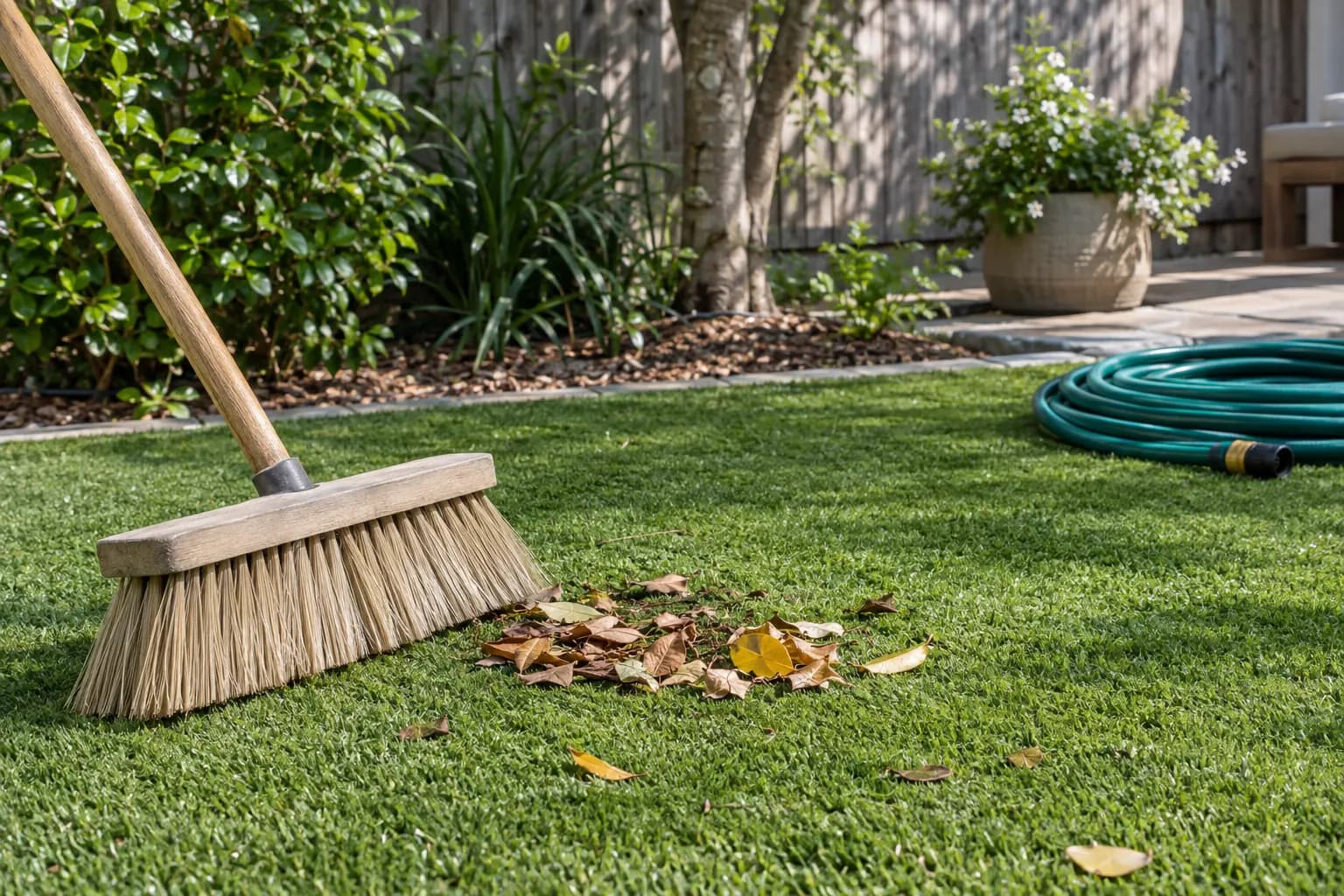
A leaf blower on a low setting is the quickest way to clear leaves and dry debris. A plastic rake works too. Avoid metal rakes, which can pull blades and catch on seams.
Do not let piles of wet leaves sit for weeks. They hold moisture against the turf, slow drainage and can grow moss or weeds at the surface. Weeds that do sprout grow in the debris on top, not up through the weed barrier, and pull out easily.
Brushing
Foot traffic flattens blades in the paths people take most. Brushing against the direction the blades lean stands them back up and keeps the lawn looking full. A stiff push broom with synthetic bristles does the job for most yards. For large areas, a power broom can be rented.
Brush more often where people walk the most, and after a party or a week of kids' games.
Rinsing and stains
A hose rinse once a month in dry weather washes off dust and pollen. For spills:
- Drinks, food and most marks: blot, then wash with warm water and a little mild dish soap, and rinse.
- Grease or oil: blot with paper towels, then use a small amount of mineral spirits on a cloth, and rinse well.
- Gum or sap: harden it with ice, then scrape it off gently with a plastic putty knife.
Avoid bleach, solvents you do not need and anything acidic. They can damage the blades and the backing.
Pets
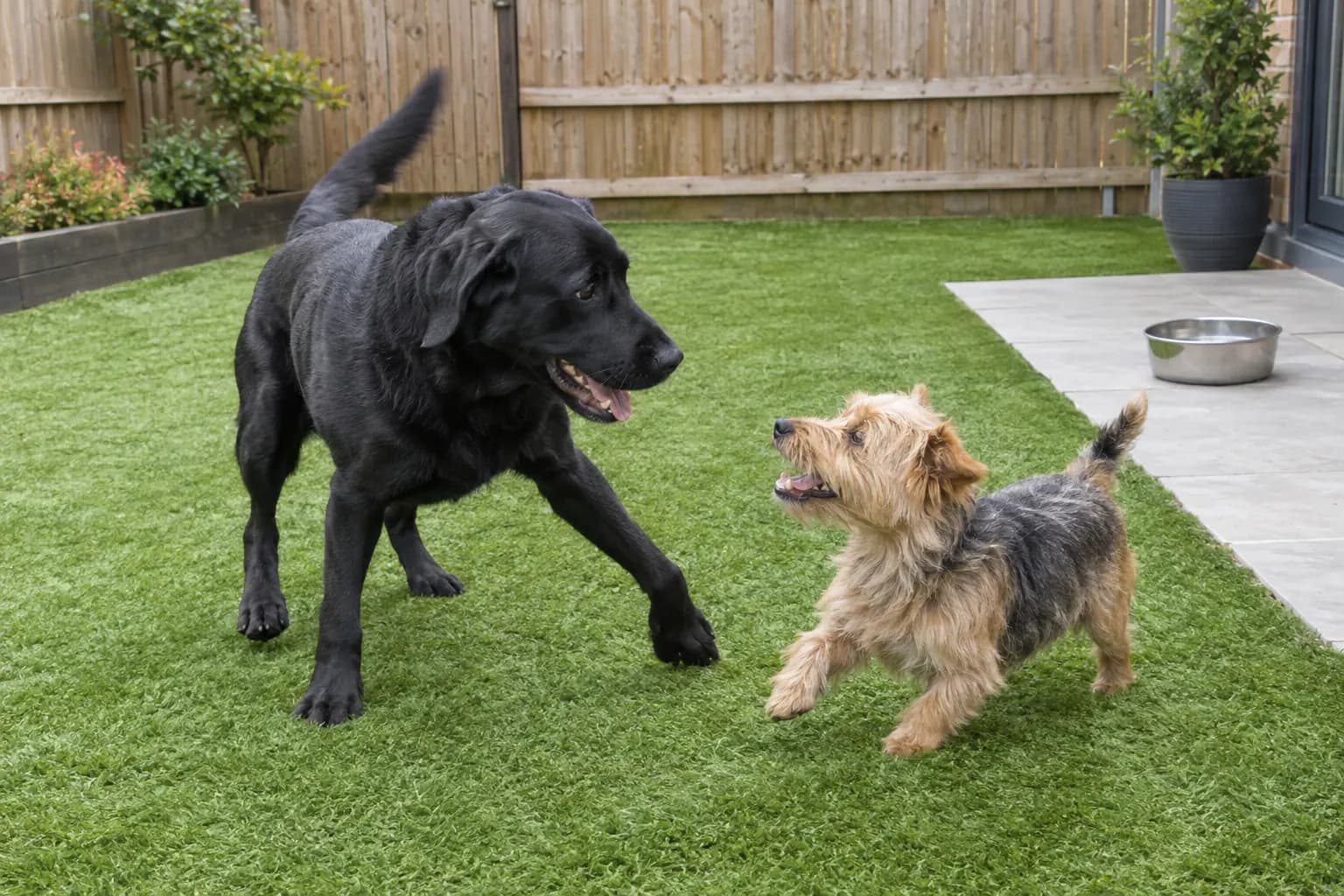
Pick up solid waste daily and hose down favorite spots. Once a month, use an enzyme cleaner made for artificial turf on the areas your dog uses most. Our turf for dogs guide covers the base and infill that keep odor down.
Infill
Infill is the sand or granular material between the blades. It holds the turf flat, supports the blades and protects the backing from the sun. Rain, rinsing and brushing move it around. Once or twice a year, spread a thin layer with a drop spreader where it has thinned and brush it in. On putting greens, infill also sets the ball speed, so add it in small amounts.
Heat and reflected sunlight
Turf gets warm in direct sun. A quick rinse cools it for a while. A bigger risk is concentrated sunlight reflected from a window, a glass door or a car windshield. It can heat one spot enough to melt or warp the blades. If you see a strip of distorted blades on the same line each afternoon, that is the cause. A screen, a film on the window or a plant in the light path fixes it. Damage from reflected sunlight is not covered by the warranty.
Winter
Snow does not hurt turf. Let it melt and drain through, or clear a path with a plastic shovel, leaving a thin layer so the blade never scrapes the turf. Skip rock salt and chemical de-icers, which leave residue in the infill. Once the snow is gone, brush the lawn to lift blades that were pressed flat.
What to keep off the turf
- Grills, fire pits and patio heaters, unless they sit on a non-flammable pad well clear of the edge.
- Fireworks, cigarettes and matches.
- Sharp-legged furniture dragged across the surface. Lift it instead.
- Vehicles and heavy equipment.
- Chemical weed killers sprayed directly on the turf. Pull weeds by hand.
Your warranty
Every line we sell carries a 15-year warranty against fading and wear under normal use. Damage from installation, pets chewing or digging, reflected sunlight and fire is not covered. Following the routine above is the best way to make sure the turf lasts the full term. The warranty page has the full details.
Have a question this guide does not answer? Contact us with a photo and we will help.