Choosing turf by use: which of our nine lines fits your yard
6 min read
Start with one question: what will happen on this patch of ground most days? A front lawn that people look at from the street needs a different turf than a dog run or a backyard green. Price and color come second. Get the use right and most of the other choices make themselves.
This guide explains the numbers on our product pages, then matches each of our nine lines to the jobs it does best.
The specs that matter
Every product page lists the same set of numbers. Four of them do most of the work.
Pile height is how long the blades are. Our lines run from 5/8 inch (True Putt) to 2 inches (Ultra Natural). Taller blades look more like a real lawn from a distance, but they lean over more when walked on. Shorter blades stand up better and are easier to clean, which is why pet and putting turf is short.
Face weight is how many ounces of blade yarn go into one square yard. More yarn means more blades, a fuller look and a softer feel underfoot. Our range runs from 44 ounces on True Putt to 90 ounces on Home Prestige. It is the closest single number to "how plush is it".
Thatch is the curly fiber at the base of the blades. It holds the blades upright and adds a second color. A brown and green thatch looks like the dead growth at the bottom of a real lawn. Active Turf uses a green thatch instead, so it reads green from every angle.
Blade shape changes how a blade behaves. Shapes with a ridge or a curve (diamond, W, M, S and U) spring back after they are stepped on better than a flat blade, and they scatter light so the lawn shines less in direct sun.
Two more numbers fill in the detail. Gauge is the spacing between rows of stitches: 3/8 inch on most of our lines, 1/2 inch on Home Elite and a tight 3/16 inch on True Putt. Stitches per square meter tells you how densely the blades are packed. Higher means a denser surface where less backing shows.
Match the turf to the job
| Use | What to look for | Lines to compare |
|---|---|---|
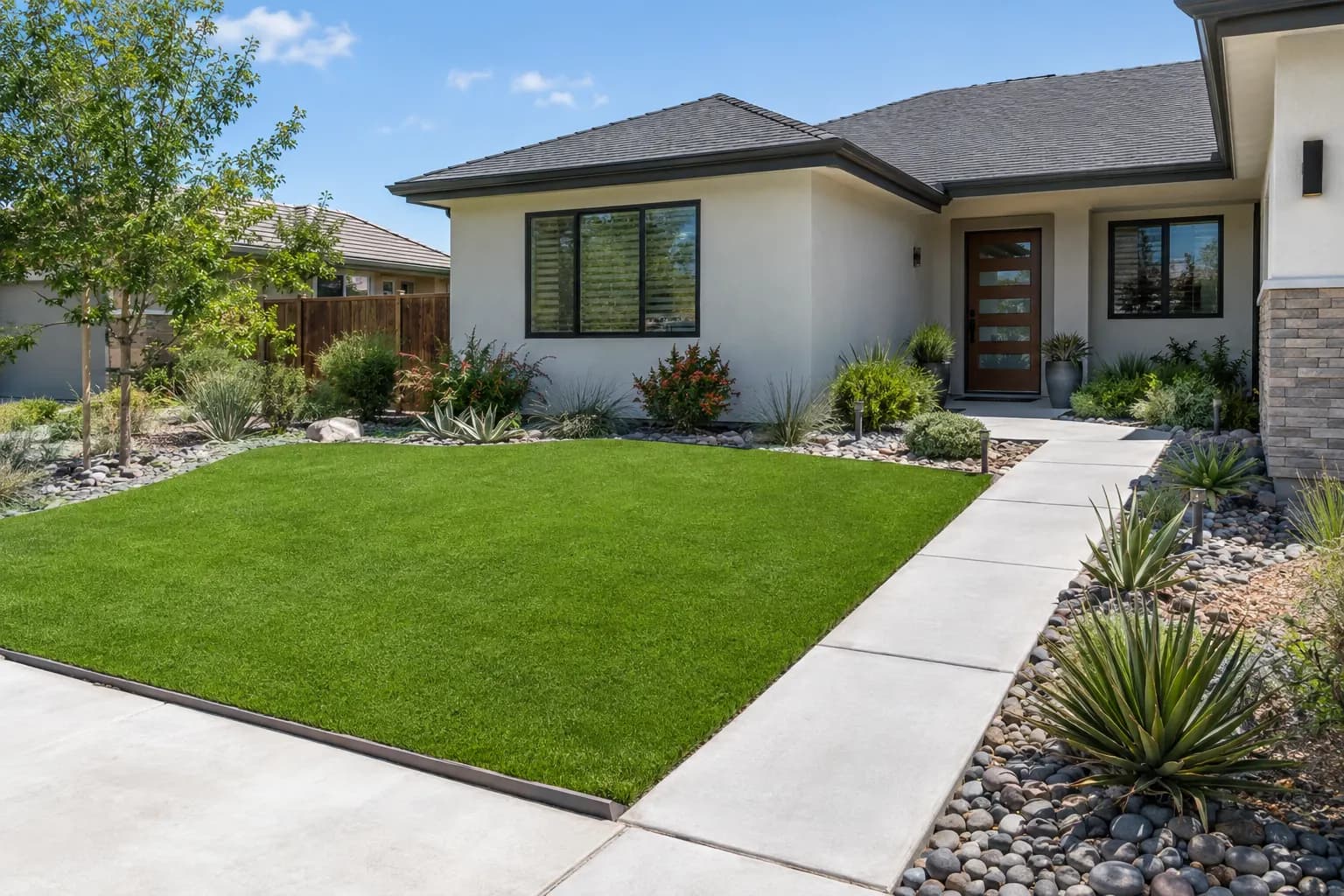
| Front lawn people see from the street | Tall pile, high face weight, brown thatch | Home Prestige, Ultra Natural, Home Elite |
| Backyard with kids and games | Medium to heavy traffic rating, a blade that stands back up | Active Turf, True Natural, Evergreen |
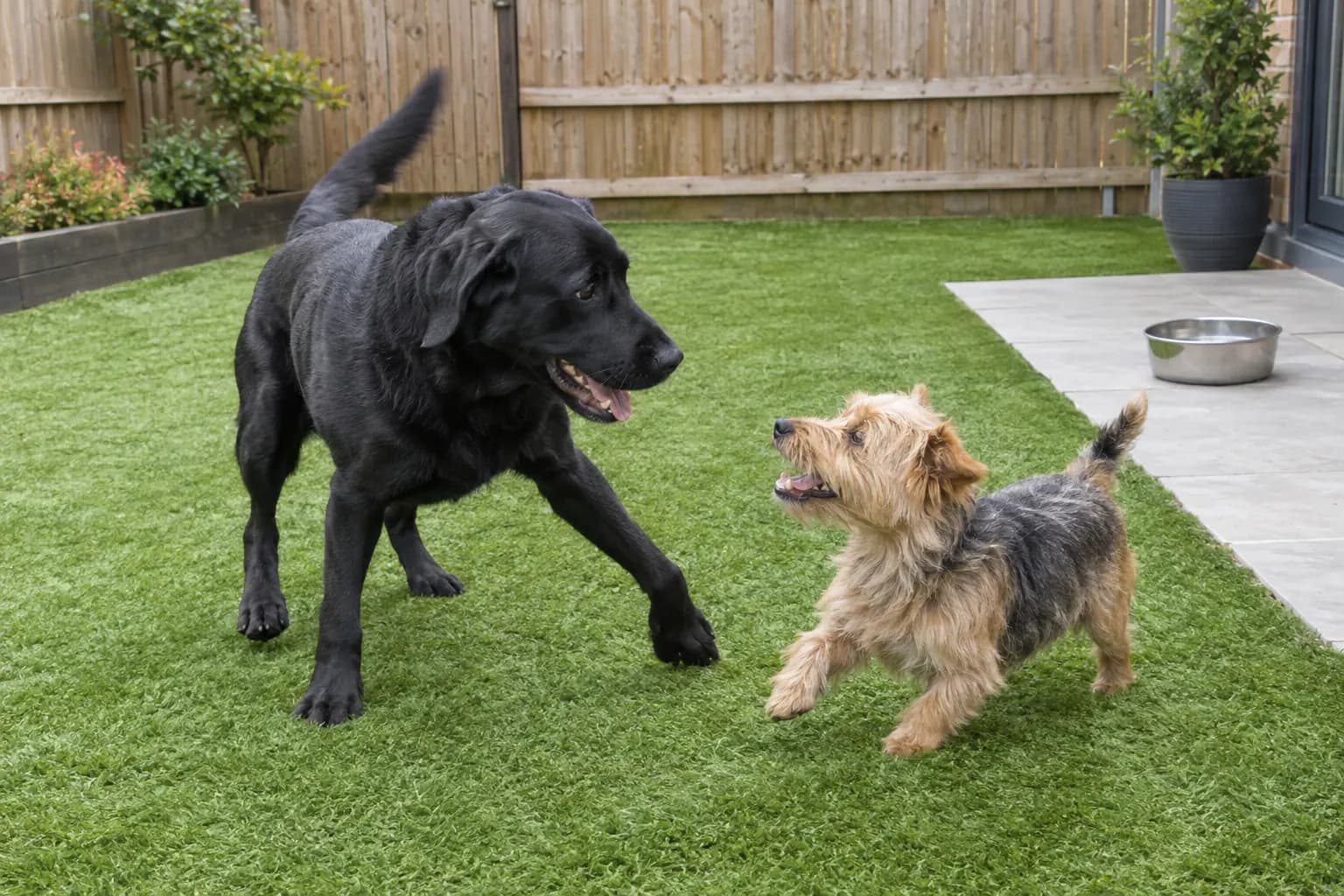
| Dogs | Short pile, dense stitching, perforated backing | Paw Pro |
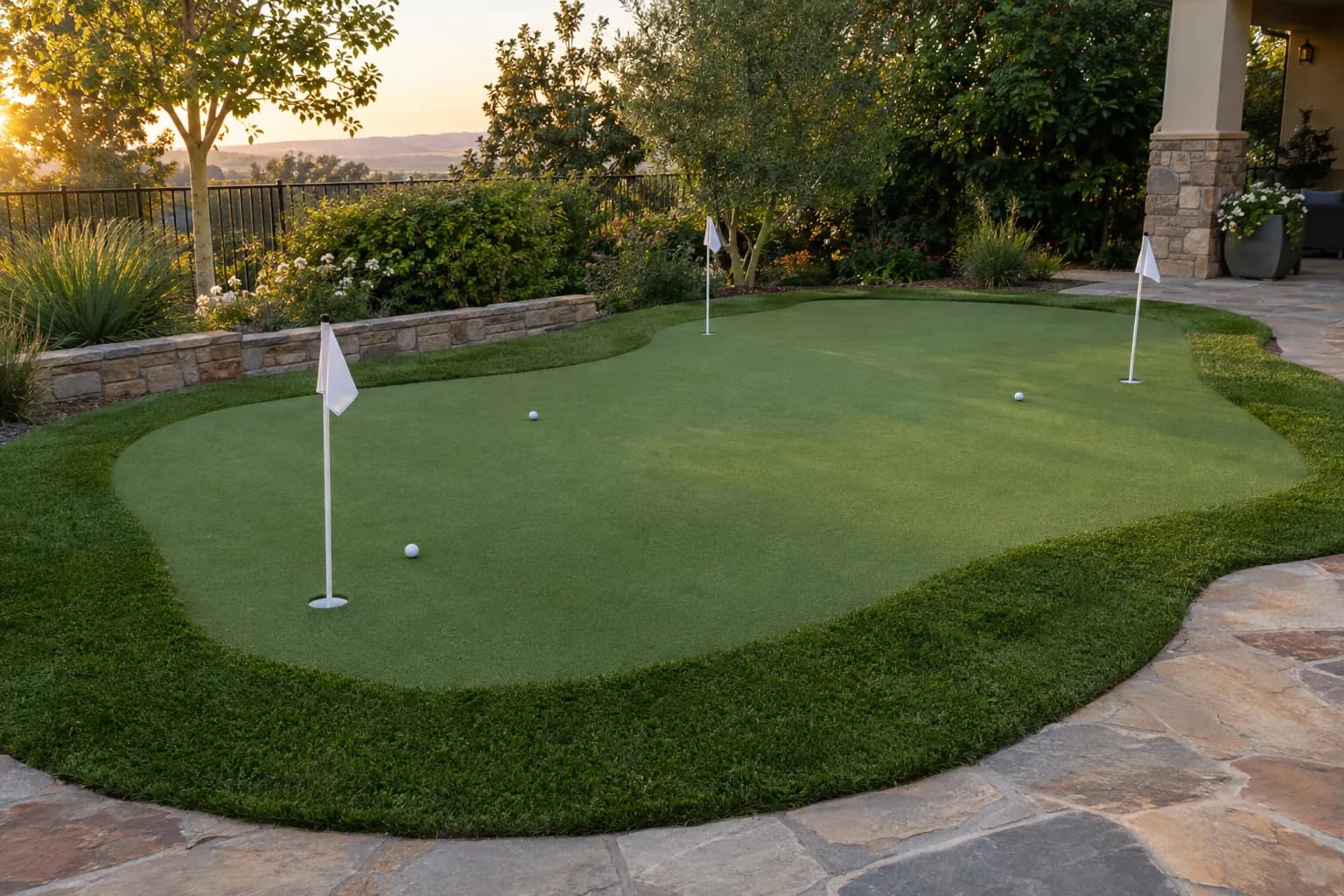
| Putting green | Very short pile, tight gauge | True Putt |
| Large area on a budget | Lighter build, lower price per square foot | Meadow, True Natural |
| Darker lawns nearby | Field and olive green tones | Evergreen |
The nine lines side by side
| Line | Pile | Face weight | Traffic rating | Colors |
|---|---|---|---|---|
| Active Turf | 1 3/4" | 63 oz | Medium to heavy | Emerald, olive, green thatch |
| Home Elite | 1 3/4" | 66 oz | Light to heavy | Emerald, olive, brown and green thatch |
| Home Prestige | 1 3/4" | 90 oz | Light to heavy | Emerald, olive, brown and green thatch |
| True Natural | 1 1/2" | 51 oz | Medium to heavy | Lime, field, emerald, light brown |
| Evergreen | 1 3/4" | 75 oz | Light to heavy | Field, olive |
| Meadow | 1.58" | 50 oz | Light to heavy | Emerald, lime |
| True Putt | 5/8" | 44 oz | Medium to heavy | Medium bi-color green |
| Paw Pro | 1 1/8" | 50 oz | Light to heavy | Emerald, olive |
| Ultra Natural | 2" | 80 oz | Medium to heavy | Light brown, emerald, field, lime |
All nine are made in the USA and carry the same 15-year warranty against fading and wear. Active Turf adds an 8-year high-traffic warranty.
A few honest rules of thumb
Tall and heavy is not always better. A 2 inch turf looks great in a front yard and less great on a path that gets walked every day, where the blades lie down in one direction. If the area is a thoroughfare, a 1 1/2 to 1 3/4 inch turf rated for medium to heavy traffic will keep its look longer.
Short turf is easier to live with. Leaves, crumbs and pet waste sit on top of a short pile and come off with a rake or a hose. That matters more than looks in a dog run.
Color depends on your light. The same turf looks brighter in full sun and darker under a tree. Compare samples outside, next to your fence, planting beds and pavers, at different times of day.
Mixing lines is fine. A putting green with a lawn turf fringe is the classic example. Lawn in the front and Paw Pro in the side yard where the dog goes is another. Each line is sold by the roll, so you can order different lengths of each.
Still stuck between two?
Order a sample of each. A sample is $10 with shipping included, and the $10 comes off your turf order later when you use the same email address or phone number. Holding two swatches side by side on your own lawn settles most debates in a minute.
When you know the line, read how much turf to order to work out roll lengths and seams before you check out.