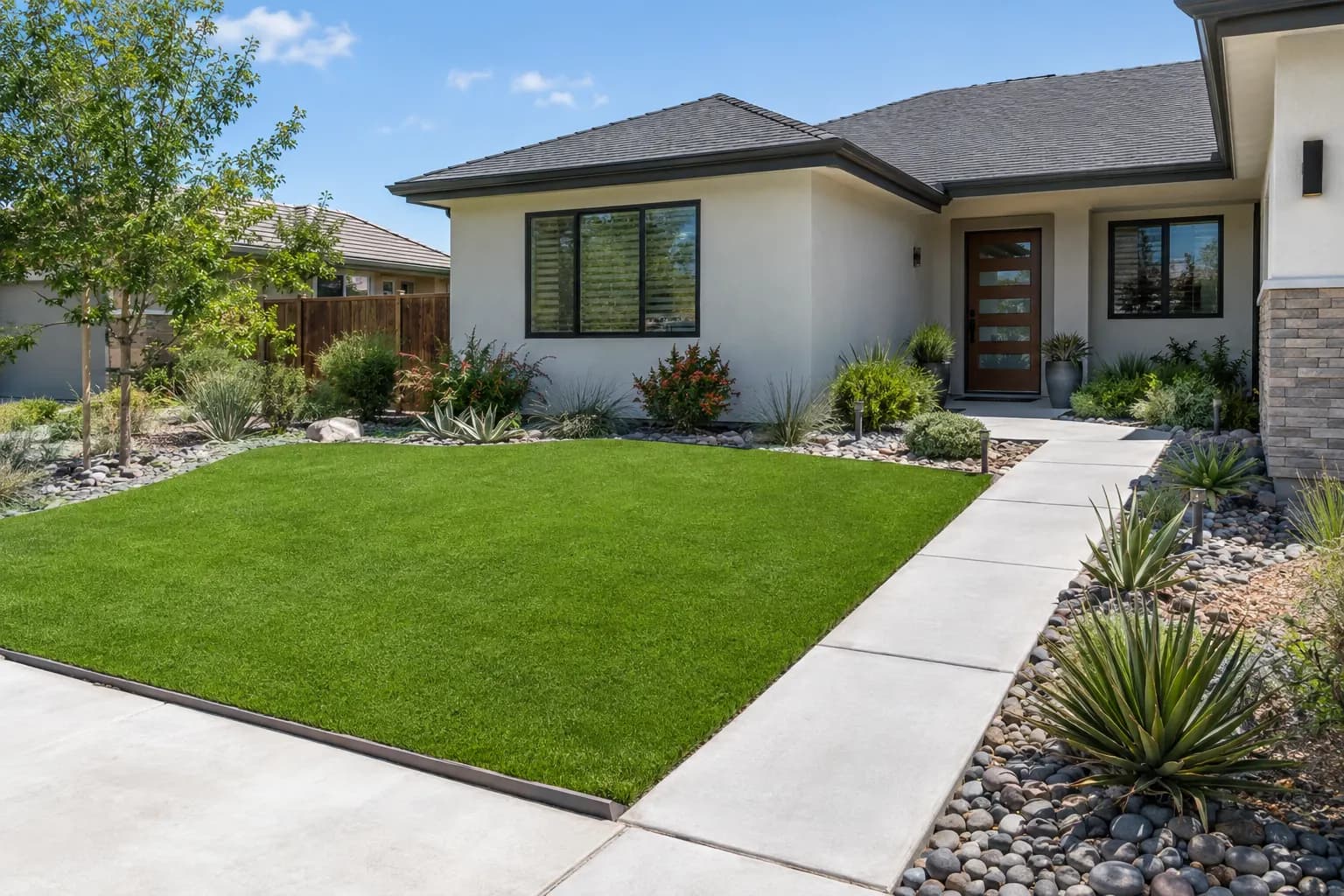
Installing artificial turf yourself: an honest overview
7 min read
Laying turf yourself can save a large share of the cost of a project. It is also hard physical work, and most of it happens before the turf comes off the truck. This overview explains what the job involves so you can decide with your eyes open.
What the job looks like
A typical backyard install has six stages. The first three are the base, and they decide how the lawn looks for years.
- Remove the old surface. Cut out the grass and dig down about 3 to 4 inches. A sod cutter, rented by the day, makes this much faster than a shovel. Plan for the soil you dig out: a 500 square foot area at 3 inches deep is about 4.6 cubic yards, several truck loads.
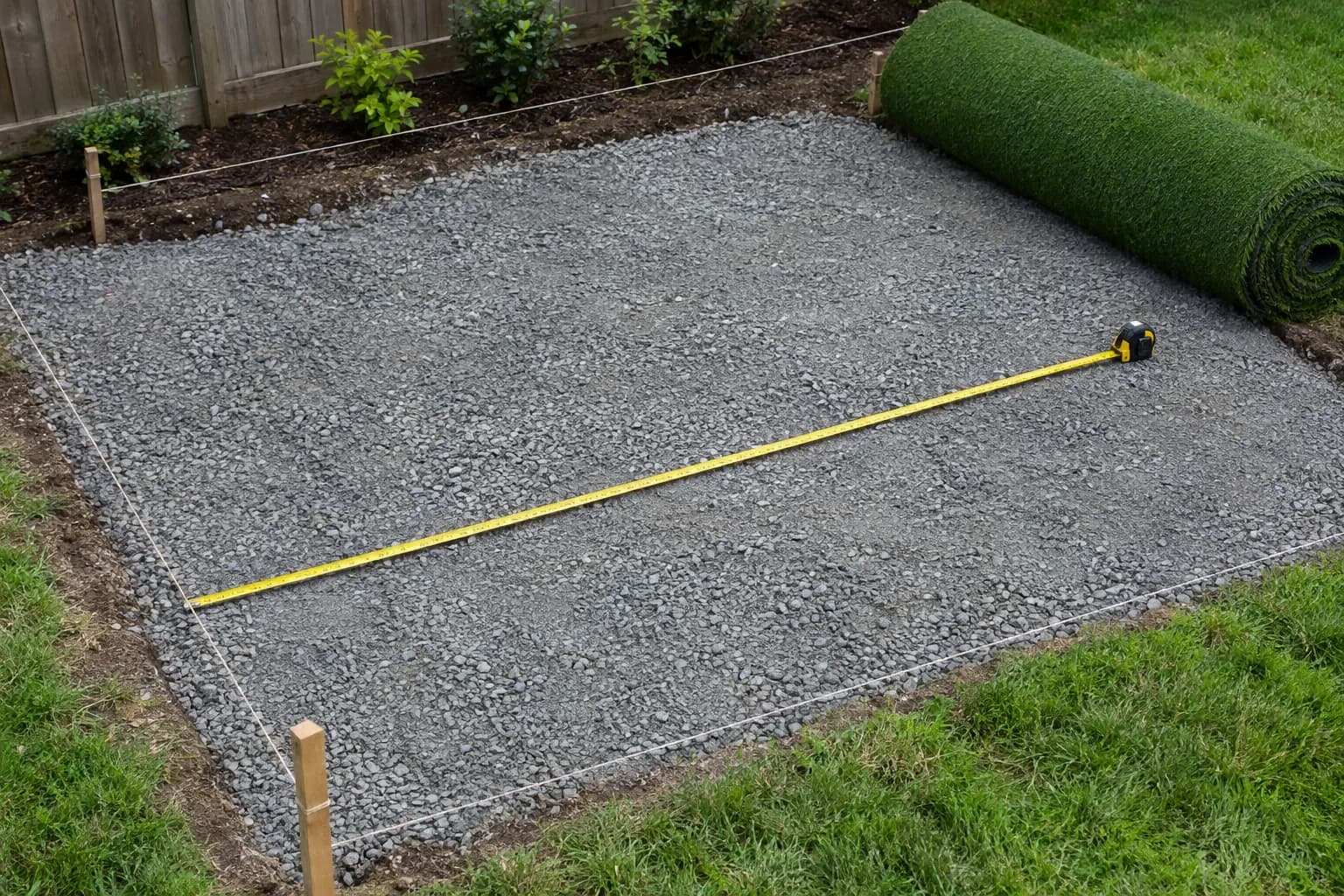
- Build the base. Spread crushed rock road base (or a clean drainage rock for pet areas) in layers, wetting and compacting each one with a plate compactor. Give the surface a slight fall away from the house.
- Smooth the top. A fine layer of decomposed granite or rock fines on top gives a smooth finish. Any bump left here will show through the turf.
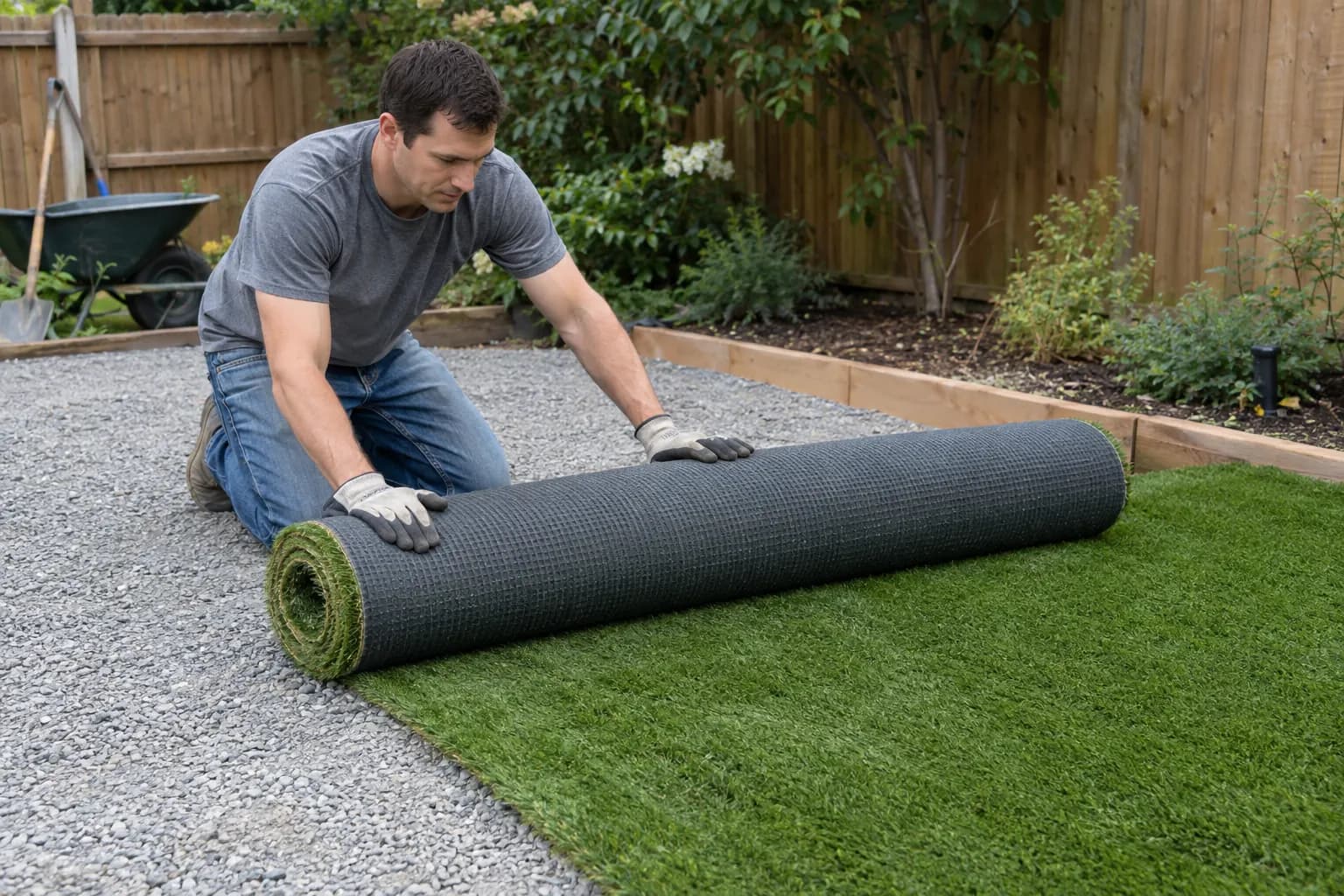
- Lay weed barrier and the turf. Roll out the weed barrier, then the turf, with every piece's grain pointing the same way. Let the turf sit in the sun for an hour or two so it relaxes and lies flat.
- Seam and trim. Trim the factory edges, butt the pieces together, and join them over seam tape. Cut the outer edges to fit with a sharp utility knife, working from the back where you can.
- Secure and finish. Pin edges and seams with turf staples, spread infill, and brush the blades up against the grain with a stiff broom.
Tools and materials
| Item | Buy, rent or in our kit |
|---|---|
| Sod cutter | Rent |
| Plate compactor | Rent |
| Wheelbarrow, flat shovel, rake | Buy or borrow |
| Crushed rock road base and fines | Buy from a landscape supplier |
| Weed barrier | In our install kit |
| Turf staples | In our install kit |
| Seam tape and seam adhesive | In our install kit |
| Utility knife and plenty of spare blades | Buy |
| Chalk line and tape measure | Buy |
| Hand tamper, for corners the compactor cannot reach | Buy or rent |
| Silica sand infill | In our install kit |
| Odor-control infill for pets, if you want it | Buy |
| Drop spreader for infill | Buy or borrow |
| Stiff push broom or power broom | Buy or rent |
| Knee pads and gloves | Buy |
How long it takes
For two reasonably fit people with no installation experience, a 500 square foot backyard is usually a long weekend: one day to dig out and haul away, one day to build and compact the base, and most of a third to lay, seam and finish. Rocky or clay ground, tree roots, steps and curves all add time.
The hard parts
Moving material. Turf rolls are heavy. A 15 foot wide roll that is 30 feet long weighs a few hundred pounds, and you will move tons of base rock by wheelbarrow. Line up helpers for delivery day and for laying the rolls.
Getting the base flat. This is where most DIY lawns go wrong. Check the base with a long straight board in several directions, fill low spots and compact again. It takes patience.
Seams. A good seam is invisible; a bad one is a line you will see every time you look outside. Trim the edges cleanly so the stitch rows meet at the right spacing, keep the grain matched, and do not let adhesive touch the blades. Practice on an offcut first.
Edges. Where turf meets a fence, a path or a bed, the cut has to be tight and the edge pinned so it does not lift. A bender board or steel edging makes this easier to get right.
When to hire a professional
DIY makes sense for a simple, flat, mostly rectangular area with good access. Consider an installer when:
- The area is large (more than about 1,000 square feet) or has several seams.
- The ground slopes, holds water after rain or is heavy clay.
- You are building a putting green with contours and cups.
- Access is tight and every load of rock goes through a side gate.
- You do not have the time, or the back, for three days of heavy work.
You can buy the turf from us either way. Our installer match passes your project to an installer who works in your area; you agree the labor directly with them.
Before you start
Call 811 before you dig, so buried utility lines are marked. It is free in every state. Check whether your city or water district offers a rebate for replacing grass, and read its rules before you remove anything, since some programs require approval first.
Then work out your roll lengths with how much turf to order, and keep turf maintenance in mind for after the job is done.