Building a backyard putting green
6 min read
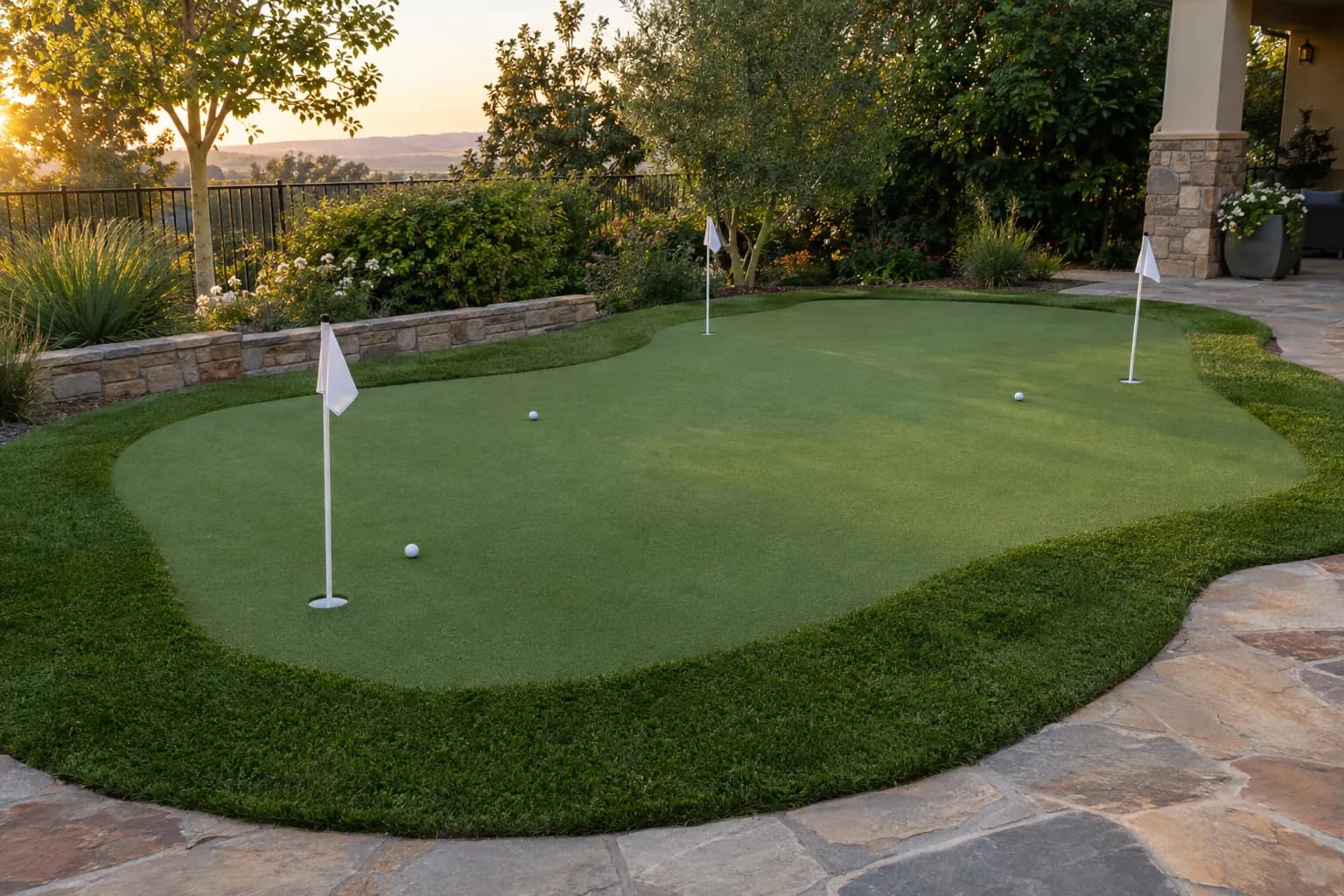
A backyard green is one of the most satisfying turf projects to build, and one of the least forgiving. Ball roll shows every bump in the base, so the work you put in under the turf decides how well it putts. This guide covers the planning: size, base, cups, speed and the fringe around it.
Choose the size and shape
Start with how you want to practice. A green for lag putting needs length. One for short putts and chipping from the lawn can be compact.
| Green size | Good for | Rolls of putting turf |
|---|---|---|
| 10 x 15 ft | Short putts, one or two cups | 1 roll at 10 ft |
| 15 x 25 ft | Short and mid-length putts, three cups | 1 roll at 25 ft |
| 20 x 30 ft | Longer putts and some contour | 2 rolls at 20 ft, one seam |
| 25 x 40 ft | A full practice green with chipping | 3 rolls at 25 ft, two seams |
Our putting turf comes on 15 foot wide rolls, so any green up to 15 feet wide can be one piece with no seam. That is worth designing around. A seam in a putting surface is the one place a ball can deflect.
Curved, kidney-shaped greens look best. Lay the shape out with a garden hose, then measure the rectangle that holds it. That rectangle is what you order; the curves are cut from it.
The base a green needs
A green needs a firmer, smoother base than a lawn:
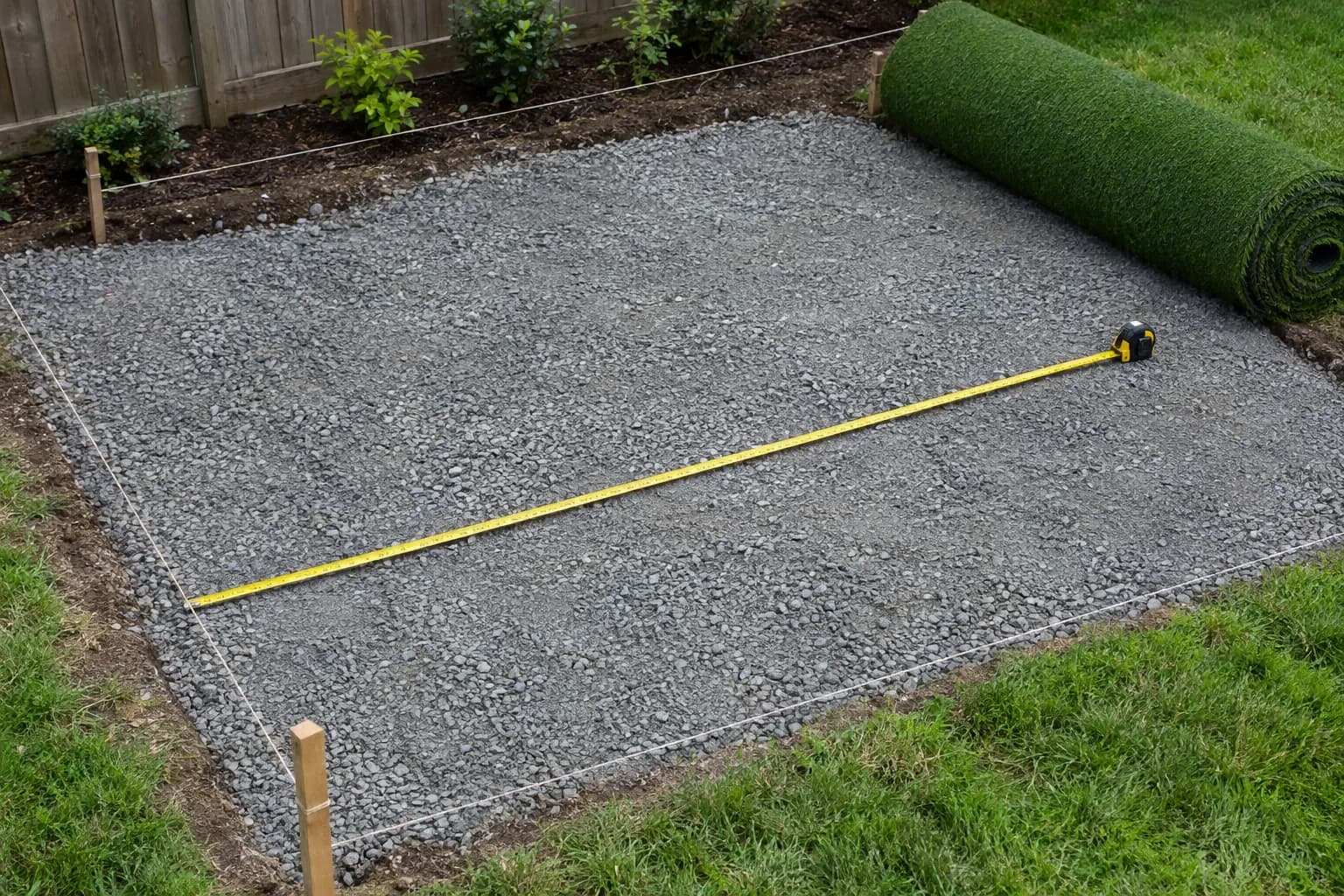
- Dig out the area 3 to 4 inches deep.
- Lay and compact a layer of crushed rock road base.
- Finish with a fine top layer, such as decomposed granite or crushed rock fines, about an inch deep. This is the layer you shape and smooth.
- Wet it and compact it with a plate compactor, then check it with a long straight board. Fill low spots and compact again until the board sits flat or follows the contour you meant to build.
Build contours into the base, not the turf. Gentle breaks of an inch or two over several feet make putting interesting. Steep slopes make the ball run off the green.
Make sure water leaves the green. A slight fall to one side is enough; the turf drains through, but the base should not hold water.
Cups and flags
Cups are set into the base before the turf goes down. Dig the hole, set the cup flush with the top of the base and compact around it. After the turf is laid, cut a clean circle in the turf over each cup with a sharp knife.
Place cups at least 3 to 4 feet from the edge and from each other, and put at least one on a slope so you can practice breaking putts. Cup kits are sold by golf and landscape suppliers.
The turf: True Putt
True Putt is our putting surface: a 5/8 inch pile stitched on a tight 3/16 inch gauge, with 21,420 stitches per square meter, in a medium bi-color green. The short, dense pile is what lets a ball roll straight. At 57 ounces total weight it is also our lightest roll, which helps when you are shaping it around curves by hand.
Tuning the speed with infill
Putting turf is finished with sand infill brushed down between the blades. Infill is how you set the speed:
- More sand makes the surface firmer and faster.
- Less sand leaves it slower and softer.
Add the sand in thin layers, brushing it in with a stiff broom after each pass, and roll a few putts between layers. Stop when the speed feels right. It is easy to add more later and hard to take it out.
The fringe
Most greens look and play better with a collar of longer turf around them, as on a real course. It catches chips that run long and hides the cut edge of the green.
Any of our lawn lines works as a fringe. Active Turf and Evergreen are good choices: tall enough to read as a different surface, and both hold up under foot traffic. The fringe is a separate order line with its own roll length.
DIY or hire it out?
A green is a reasonable DIY project if you are comfortable with a plate compactor and patient with the base. If you want contours, several cups and a seam, an installer with putting green experience will usually get a truer surface. Use our installer match and mention it is a putting green.
If you are building it yourself, read the DIY install overview for the tool list, and order a True Putt sample to roll a ball across before you commit.